2026-09-15 ·
Best Practices for Disposing of Hot-Weather Construction Debris in Apple Valley
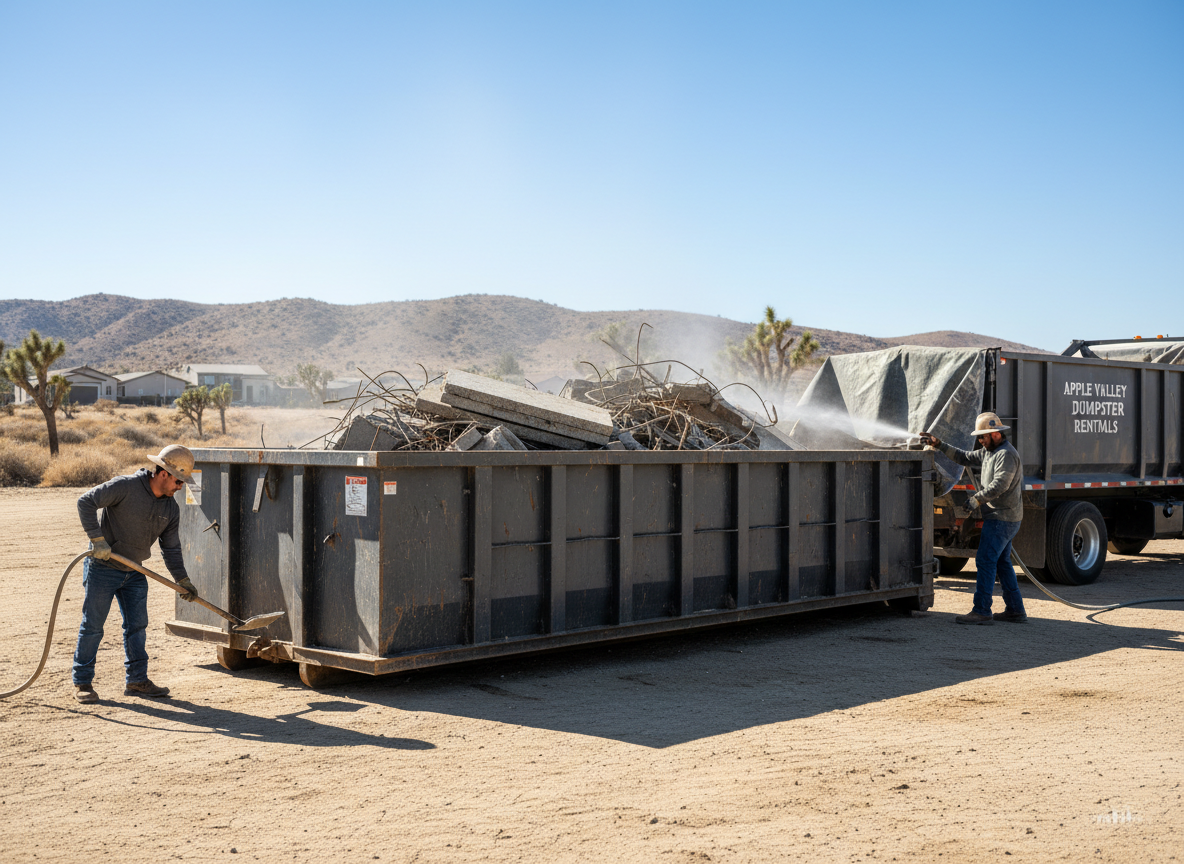
In Apple Valley's hot desert climate, the most effective approach starts with choosing a construction dumpster rental sized for the job and scheduling deliveries and pickups during early morning or evening hours to limit exposure to 100-plus degree temperatures. This reduces risks of asphalt softening, plastic warping, and excessive dust that blows across neighborhoods like Downtown Apple Valley and near the Mojave River.
Heat Impacts on Common Construction Materials
High summer temperatures in San Bernardino County accelerate material breakdown during disposal. Asphalt shingles and roofing tar soften and stick to dumpster walls, while untreated lumber can dry out and splinter more easily when loaded in direct sun. Concrete and dirt loads retain heat longer, raising the chance of steam burns if workers touch surfaces after midday loading. In areas like Jess Ranch, where many homes sit on larger lots with older builds from the 1980s, crews often encounter mixed loads of drywall and insulation that absorb and hold heat. Covering loads immediately with tarps prevents wind from scattering lightweight particles across Desert Knolls streets. Workers should wear gloves rated for high heat and rotate shifts to avoid fatigue common in the region's mild winters turning abruptly into intense summer conditions.
Choosing and Positioning Dumpsters for Desert Conditions
Select a construction dumpster rental with reinforced sides when the job involves heat-sensitive materials such as vinyl siding or foam insulation. Place the unit on a flat, shaded spot when possible, or use plywood under the wheels on soft desert soil common near Apple Valley Park. In Victorville and Hesperia projects, many operators position dumpsters away from direct afternoon sun paths to keep interior temperatures lower. Check local placement rules before setting a unit on the street by reviewing Apple Valley permit requirements. Avoid blocking drainage paths that carry monsoon runoff toward the Mojave River. A 20-yard or 30-yard container often works best for typical residential remodels in these neighborhoods because it allows layering of heavy items at the bottom before lighter debris is added.
Safe Loading and Worker Practices in Extreme Heat
Load heavier items such as concrete chunks or metal first during cooler morning hours, then top with lighter materials before sealing. Never overload past the marked weight limits, as heat-expanded materials can shift during transport to facilities serving Adelanto and surrounding cities. Provide shade tents and ample water for crews; the combination of physical labor and desert heat increases dehydration risk quickly. Use concrete and dirt dumpster rental when separating those materials to prevent contamination that complicates later processing. Keep a fire extinguisher nearby because dry vegetation and hot metal scraps can ignite under direct sun. Rotate team members every 45 minutes and monitor for signs of heat stress, especially on multi-day jobs in older housing stock around the Victor Valley Museum area.
Scheduling Pickups and Follow-Up Disposal
Request pickup before 8 a.m. or after 6 p.m. during peak summer months so drivers avoid the hottest part of the day on routes through Hesperia and Apple Valley. Confirm the rental company offers 24/7 availability to accommodate last-minute changes when weather forecasts shift. After the dumpster leaves, inspect the site for stray debris that wind may have moved toward nearby landmarks. For larger remodels, consider splitting loads across two smaller hauls rather than one oversized container that sits longer in the sun. Track costs by reviewing typical pricing details in What Construction Dumpster Rentals Usually Cost in Apple Valley. Proper planning keeps projects on schedule despite the region's temperature swings and reduces the chance of materials degrading before they reach the landfill.
Local Regulatory and Environmental Notes
Follow San Bernardino County guidelines for construction waste separation, especially when disposing of treated wood or painted materials that may require special handling. Place units only where permits allow, and reference Apple Valley Permit Rules for Placing a Dumpster on the Street before any street placement in Downtown Apple Valley. Keep loads covered at all times to limit dust that can affect air quality near the Mojave River corridor. Separate recyclables such as metal and clean wood when possible to reduce overall volume and cost. These steps protect both the job site and surrounding neighborhoods like Jess Ranch from unnecessary environmental impact during the long hot season.